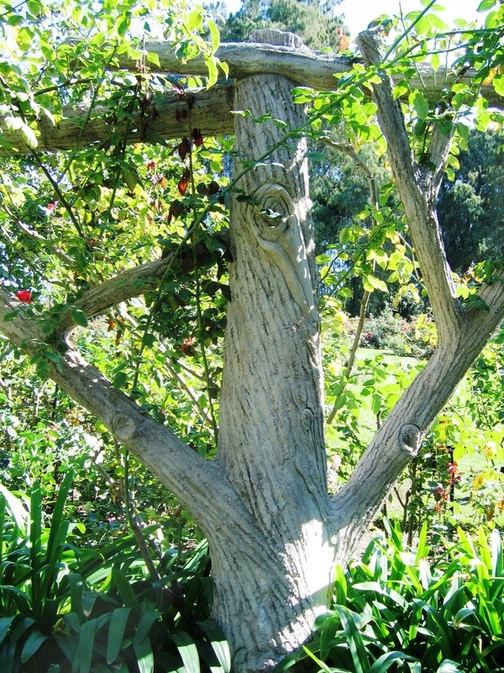
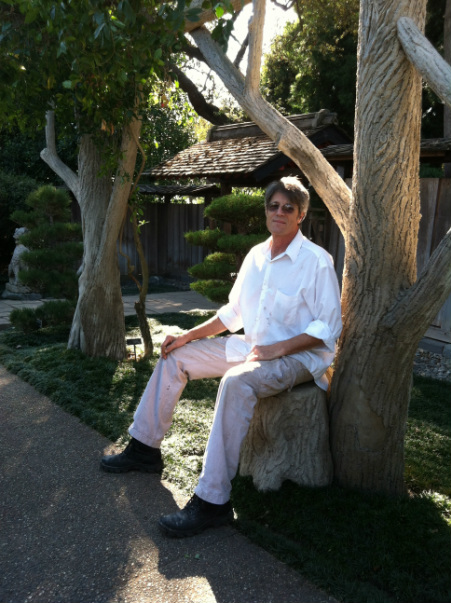
Here are some photos from a restored section of the faux bois arbors in the Rose Garden of
The Huntington Library, Art Museum, and Botanical Gardens
The Huntington Library, Art Museum, and Botanical Gardens
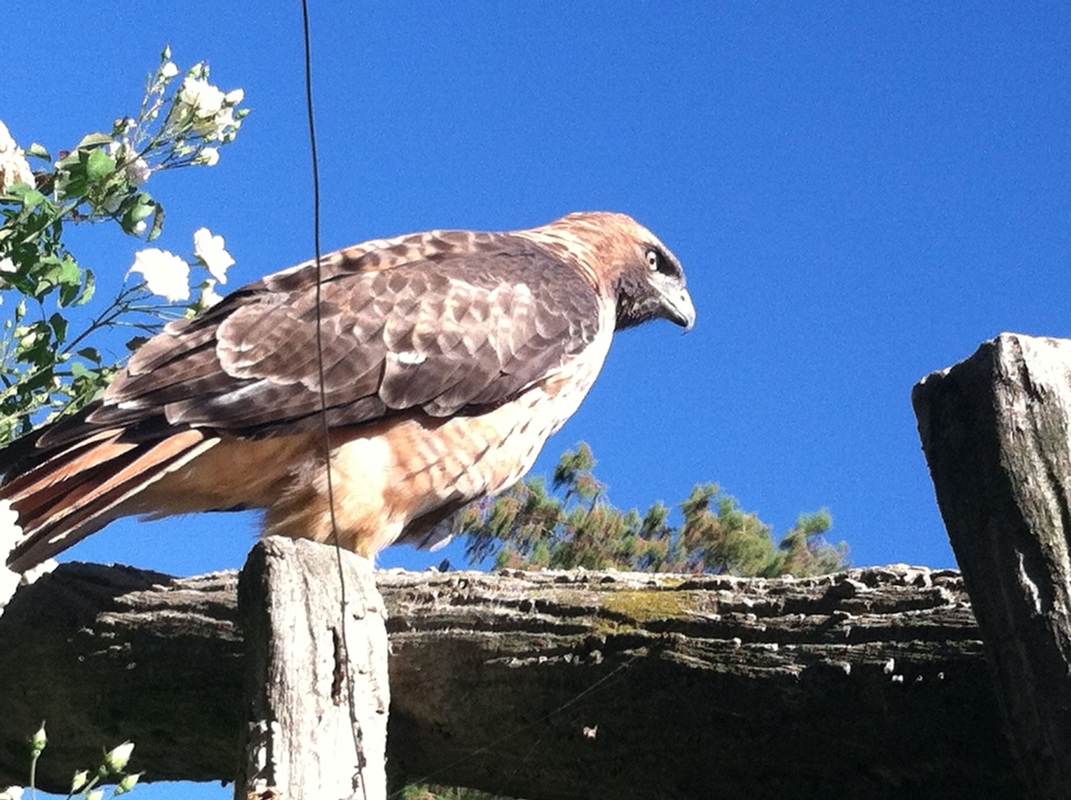
This fellow, a Red Tailed Hawk, landed right next to me.
I just love this place! |
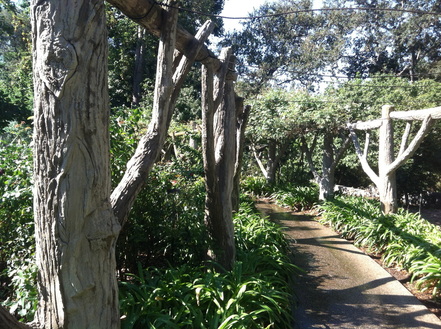
My color blending of old and new faux bois looks good even when the material is wet.
I achieve this by mixing a fine slurry of a grout color that matches the old material. In the final coloring steps, it is used as a dry brush highlight. In this way, color tones can be worked back and forth. |


I use a disposable pastry bag to put pressure behind my mud.
This pushes it into into voids and makes some interesting textures. 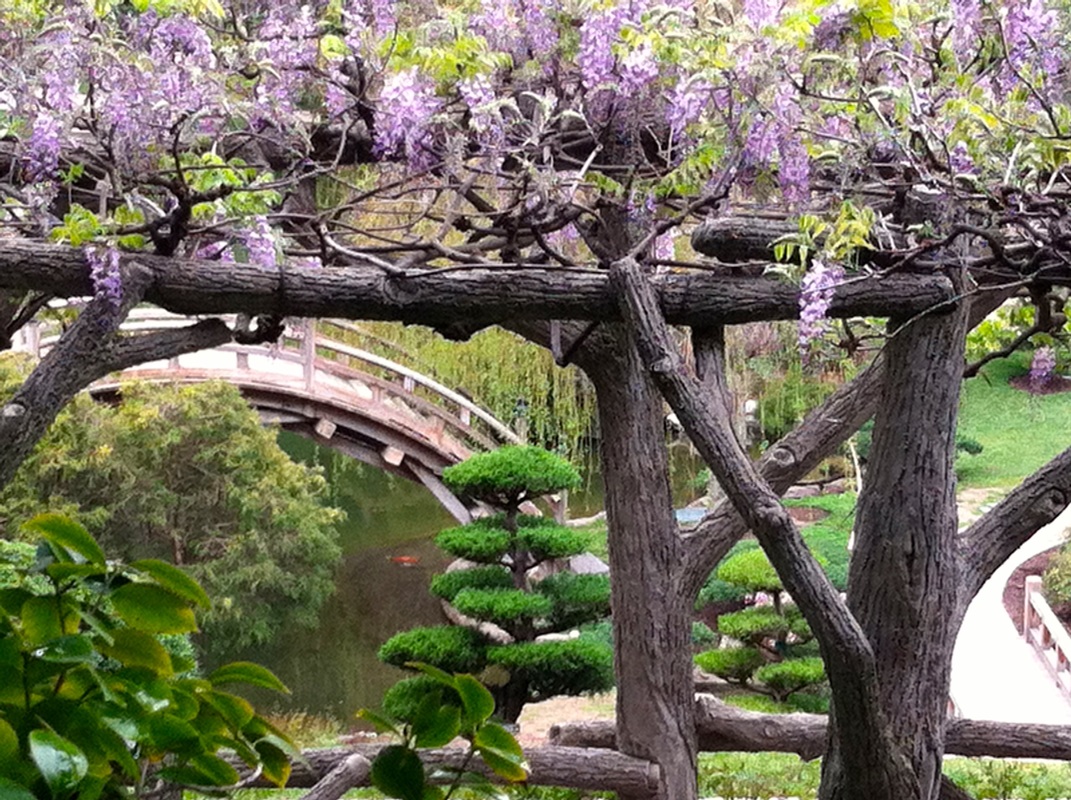
|
|
